Library · Service
Psychodynamic Psychotherapy
Who it’s for
Newcomer relevance
People who sense that the past still runs the present — in mood, self-criticism, or repeating relationship dynamics — and want a thoughtful, unhurried exploration.
Process & benefits
What can shift
We explore links between then and now with care, including dreams, slips, and the feelings that arise in the room. Understanding becomes a basis for choice, not a label.
What is psychodynamic therapy?
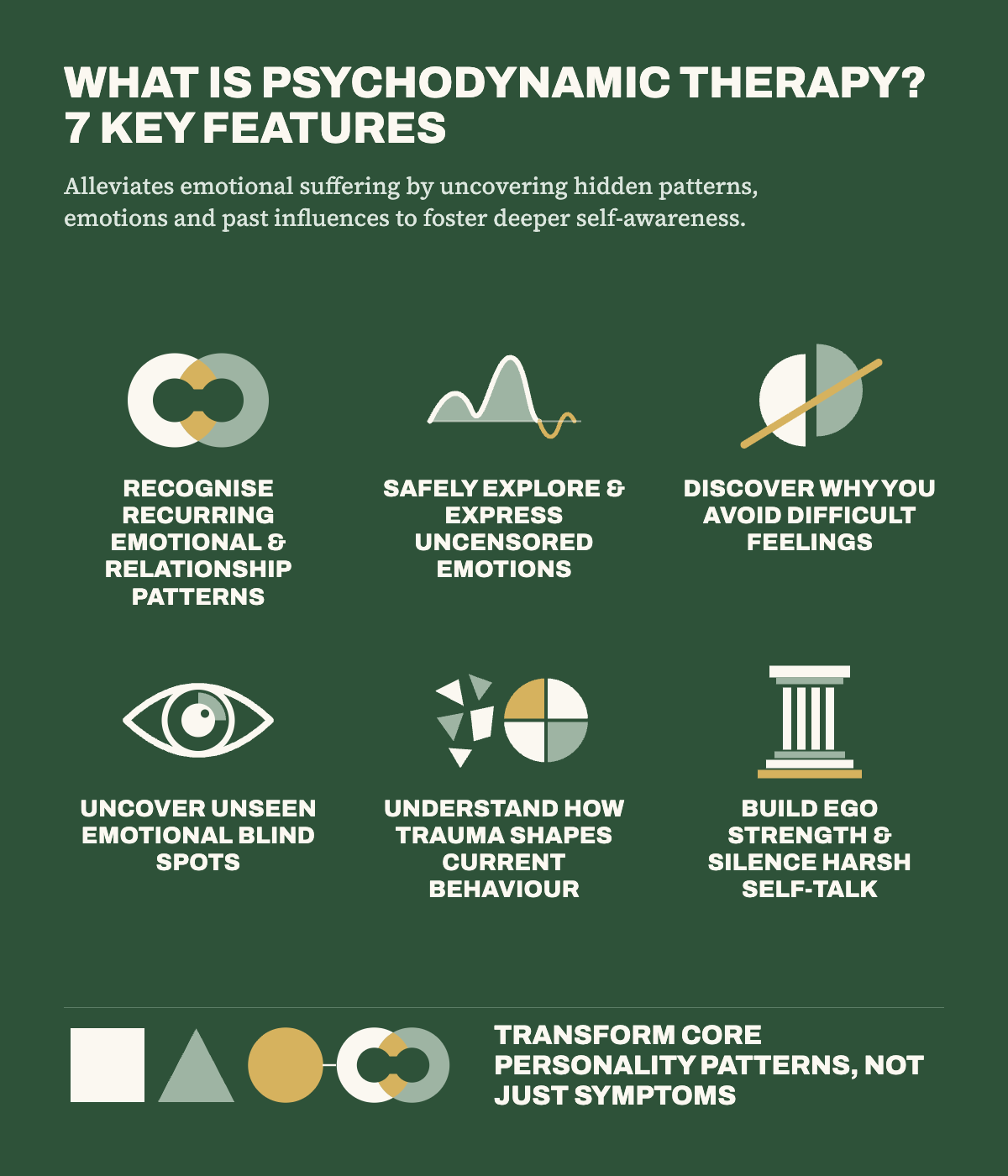
There’s no single definition of psychodynamic therapy. Here’s what it means in my work.
It looks for patterns. The same relationships, feelings and reactions often repeat, and they usually began somewhere early. Seeing where a pattern came from gives you a choice about whether to keep it.
It helps you feel more. Therapy is a place to say what you really feel, as openly as you can. Feelings that seemed too much often turn out to be manageable.
It explores what you avoid. The ways you learned to protect yourself as a child may now be getting in your way.
It brings blind spots into view. We all have parts of ourselves we’d rather not see. Approaching them with curiosity rather than shame helps you feel more whole.
It takes the past seriously. Difficult experiences shape how we cope. Understanding those coping strategies, without blame, can make room for more safety and closeness.
It strengthens your sense of self. Many people carry a harsh inner critic. Therapy helps you recognise it, understand it and stop taking orders from it.
It looks beneath the symptoms. The focus is on who you are and how you relate, not just on what’s going wrong.
The aim is simple: to know yourself well enough to live by choice rather than by habit.
Further information on this type of therapy: